

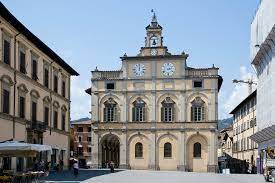
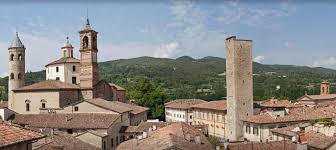
Still surrounded for good stretches by 16th-century walls, Città di Castello stretches along the Tiber valley, where the Romans had established the municipality of Tifernum Tiberinum. The ancient history of Città di Castello is testified by the buildings that were the seat of the ancient administrative structures, among which the Palazzo del Podestà, with its Baroque façade dating back to 1686, and the Palazzo Comunale, built in Gothic style with an elegant portal and mullioned windows with two lights, are particularly noteworthy.
 |
 |
 |
 |
The Pinacoteca Comunale (Municipal Art Gallery) features a 16th-century façade in graffiti by Vasari. It houses works by Rafffaello (Stendardo della SS Trinità, 1503 ex voto per la peste), Luca Signorelli (Martirio di S. Sebastiano, 1497-14981) Domenico Ghirlandaio and Andrea della Robbia.
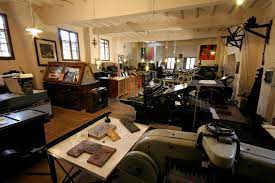
In the Grifani Donati Typography, founded in 1799, the only one of its kind still active today, a Museum of Graphic Arts has been set up to present the tradition of typography and publishing, present in the city since the 16th century, and to allow visitors to rediscover the ancient craft techniques of the art of printing.
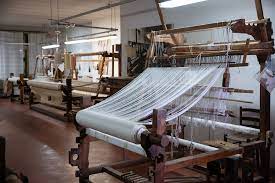
Umbrian Canvas Museum. Umbrian weaving, to which the handicraft tradition of the Tela Umbra workshop is also connected, constitutes one of the most prestigious artistic expressions. In the 14th and 15th centuries, Umbrian textile production experienced a strong impulse and spread throughout Europe, as documented in the iconography of paintings by great Renaissance artists. The Textile Collection is located on the second floor of the ancient Palazzo Tomassini, formerly Bourbon del Monte, and spans nine cleverly arranged and ordered rooms.
More information can be found at: https://www.cittadicastelloturismo.it/