

Founded by the Romans, the city received the visit and occupation of the Lombards, and then became a free commune, favorable to the policy of the Germanic Romanesque emperor against Florence who supported the Pope. After the defeat of Montaperti in 1260, Siena was determined to the latter. Lost its political influence, paradoxically, it is from that moment that Siena focuses on trade and business.
Its location is ideal for a Tuscan visit. Next to Siena, to the east is the Chianti Valley and a little further on the Valdichiana (Arezzo, Cortona). To the north Florence about 75 km. Siena is one of the seven places of Tuscany UNESCO World Heritage.
The old town is dominated by the Torre del Mangia and the Duomo, the Cathedral of Santa Maria Assunta. Next to them the Palazzo Pubblico, current town hall, and the ancient hospital of Santa Maria della Scala are some of the main monuments.
The tower of Mangia that reaches 102 meters high dominates the historic center of Siena. It is she who dominates the Piazza del Campo, also called the Campo, the main square of the city where twice a year the famous Palio festival is celebrated. The square is the center of the center of Siena, from it depart numerous alleys that will lead us to all corners and cracks and hidden places
Palio di Siena
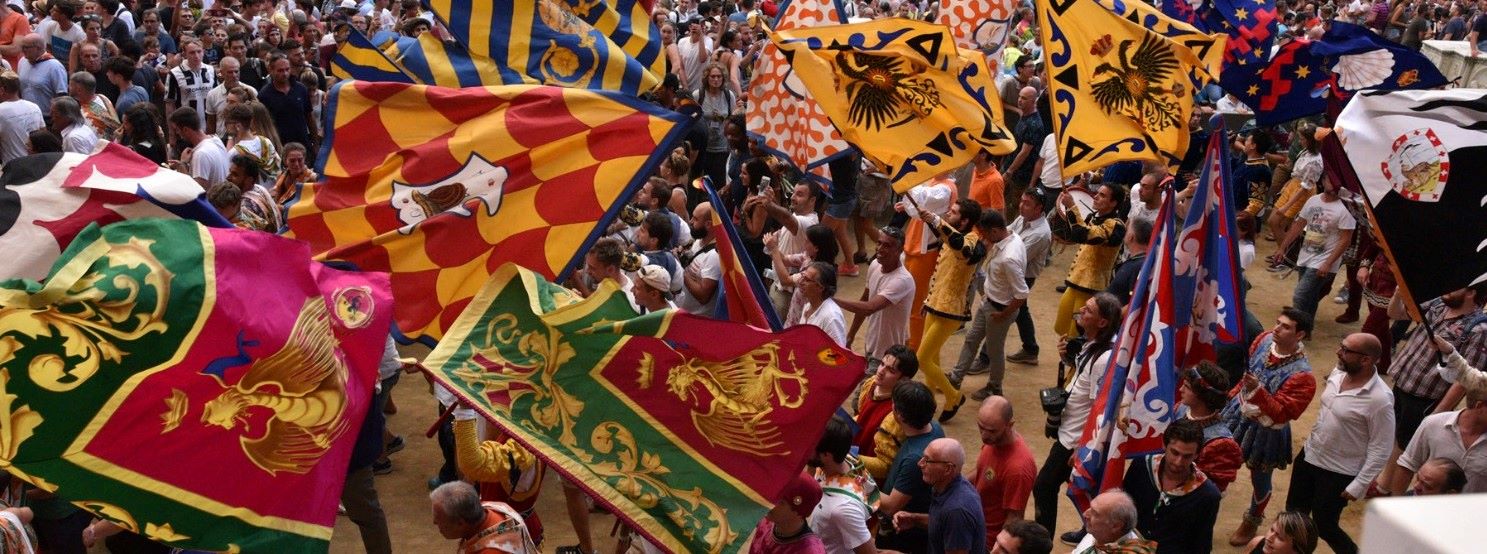
It is one of the most famous events in Italy and famous all over the world: the Palio di Siena, of ancient origins, is a competition between the seventeen Contrade of the city.
This page contains all the information related to the great historical and religious event of Siena: secrets, curiosities and anecdotes. But also the tradition and rules of this race that every year, in summer, attracts thousands of tourists from all over the world.
 |
 |
Museums in Contrada
The city of Siena is historically divided into 17 districts that are exactly in the Terzi of Città, San Martino and Camollia.
The 17 districts were defined in 1729 with the "Ban on Borders" of the Governor Violante Beatrice of Bavaria and are: Eagle, Caterpillar, Snail, Owl, Dragon, Giraffe, Porcupine, Leocorno, Lupa, Nicchio, Goose, Wave, Pantera, Selva, Ucatart, Tower, Valdimontone.
The Contrada as well as from its territory with well-defined borders is represented above all by its people: the contrada. The belonging of the contrada to the contrada is defined by: place of birth, as born in that particular territory and is therefore referred to as native contrada; descent: children born to parents of contradaiolo extraction in a place that does not necessarily "contrada" belong to a contrada.
 |
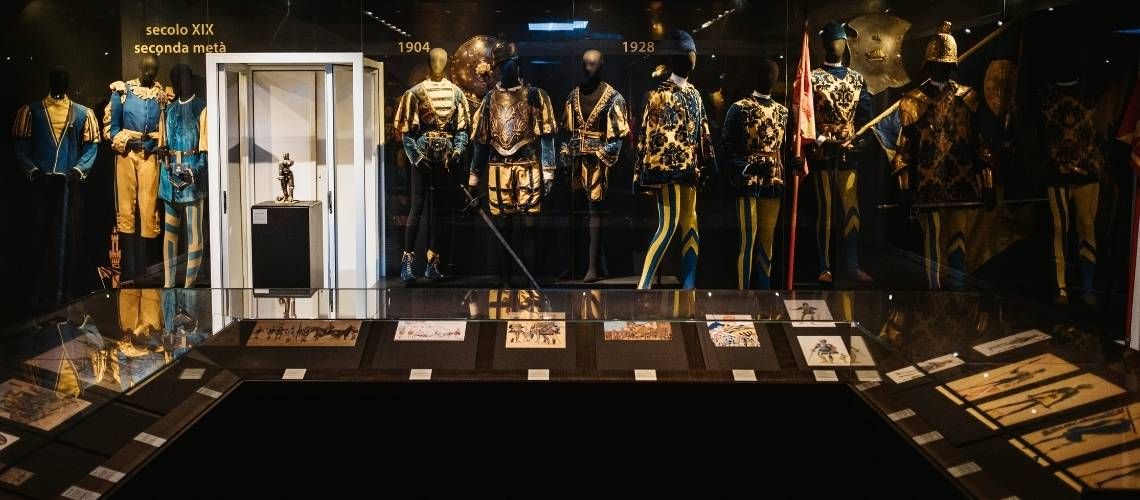 |
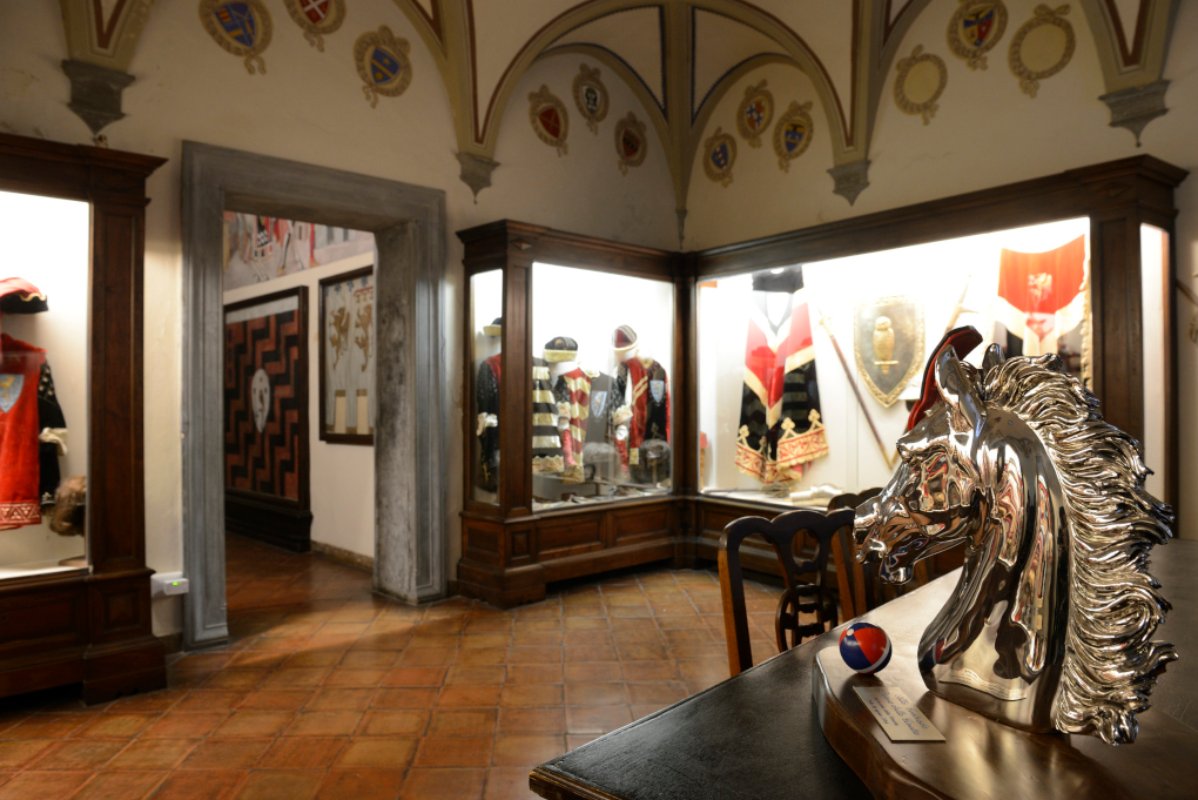
Sympathy: allows those who do not belong to the previous categories to choose "for sympathy" a contrada and become members, paying a protectorate and actively participating in the life of the same. To really know the history of a contrada you have to visit the museums. Each district has its own museum that holds unique treasures and curiosities related to the district, in addition to the collection of won palios, the work of great artists. A museum of contrada whose name we will not disclose, but we will leave to you the pleasure of discovering it, even guards a "drappellone" painted by the great master of contemporary art, Fernando Botero.
It is typical to find these "trophies" in the Hall of Victories of each museum. The Drappellone or Palio that the Sienese call the "cencio", coincides with an original painting, work of several artists, made on a silk banner that at the end of the Palio is delivered into the hands of the victorious people. Also in the Hall of Victories you can admire the masgalani, assigned to the appearance that proved to be the best, for elegance and coordination, during the solemn moment preceding the race, or the historical parade.
Also inside the contrada museums, there is a section dedicated to religious tradition and that collects valuable works of sacred art from the church or the oratory of contrada. In addition to vestments, sacred furnishings and "trophies" the museums of contrada also preserve the costumes "monture" worn throughout history and ancient flags.
Site: museo.tartuca.it
Porta Camollia and the Women’s Fort
Porta Camollia, is one of the oldest gates of Siena, the name Camollia is linked to the legend about the foundation of Siena: in the seventh century B.C., Romulus, father of Rome, would have sent the leader Camullio to capture his nephews Senio and Ascanio. The leader established in the area where today stands the door, his camp. A document of 1082 mentions, in fact, the "Door of Camullia".
Looking up at the top of the door you can see the inscription Cor magis tibi Sena pandit which means Siena opens the heart more than its door, dedicated to those who cross it. The inscription was made to honor the entry into the city of Ferdinand I of the Medici, Grand Duke of Tuscany. This inscription was made in 1604, when the door was rebuilt after being completely destroyed in 1555 by the Medici army.
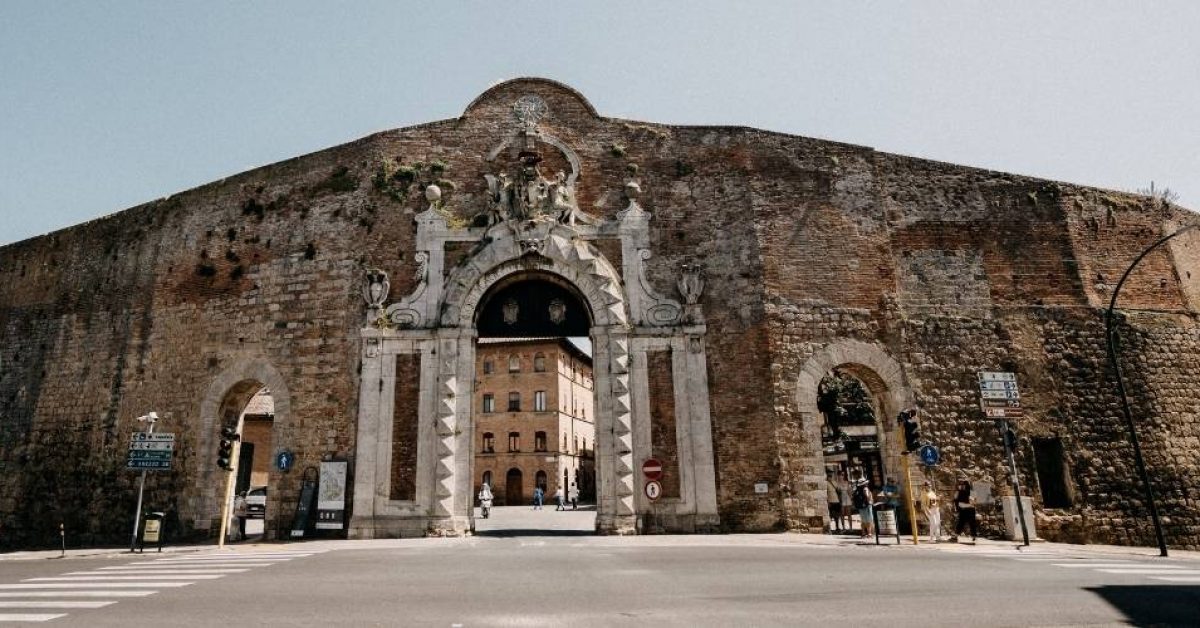
A few meters below, to the left of the door, you can see the remains of the Fortino delle Donne, built in 1526 after the battle of Camollia, fought between the Republic of Siena and that of Florence.
This fortification was built by Sienese women. To defend their city, three thousand Sienese women, led by noblewomen Livia Fausti, Fausta Piccolomini and Laudomia Fonteguerri, were divided into three groups of both nobles and bourgeois. Armed with pickaxes, shovels and bundles, they built the fortification physically.
The fortification had to contain both cannons and arquebuses, with a firing angle of about 180 degrees, the fort was a huge firearm ready to defend the city in its weakest side, the north. At the end of the valiant resistance, Siena was forced to surrender; in 1555 the Florentines, allied with the imperial army, had the better.
Museums
Below you will find a list of museums that you can visit in Siena:
- Santa Maria della Scala Museum Complex
- Museo dell'Opera Metropolitana del Duomo
- National Art Gallery of Siena
- Museo Civico
- National Archaeological Museum of Siena
- Museum of the Biccherna Tablets
- Museum of the Contrade of Siena
- Civic Museum for the Natural History of Siena
- Biblioteca Piccolomini
- Museum of Torture
For information visit: Visit Siena official